
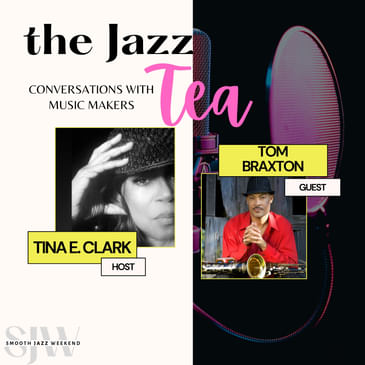
🎶 Welcome to The Jazz Tea: Conversations with Music Makers! 🎶
Dive into the rhythm and soul of music with us as we embark on a journey through the lives and artistry of jazz's most captivating creators. From seasoned musicians to visionary producers, and every melodious soul in between, join us for intimate conversations that unveil the heart and art behind the music.
🌟 What to Expect: 🌟
Discover the untold stories and inspirations that shape your favorite jazz tunes and the brilliant minds that craft them. Each episode, we’ll unpack the creative processes, musical epiphanies, and the stories behind iconic song titles, giving you an exclusive backstage pass to the music scene's best-kept secrets.
🎙️ Meet Your Host: 🎙️
As a musician and radio host, Tina E. Clark brings you up close and personal with the artists who make your heart sing. Join us as we sip on The Jazz Tea, celebrating the music makers and the magic they create.
Tune in, turn up the volume, and let the jazz flow!
Hosted on Acast. See acast.com/privacy for more information.
[00:00:00] Get ready to enjoy The Jazz Tea. Conversations with music makers. A blend that's as delicious and satisfying as your favorite cup of tea. Rich, soothing and full of flavor. Every episode is like having an exclusive backstage pass to the lives and artistry of jazz's most
[00:00:23] captivating creators. Enjoy cozy, intimate chats that reveal the heart and soul behind the music, the untold stories and the brilliant minds that create them. Join your host, Tina E, an award-winning songwriter, music producer and entrepreneur as she brings you a creative
[00:00:41] look into the world of jazz. Tune in, savor the experience and let the world of jazz captivate your senses. Hey what's up everybody I'm Tina E, host of the nationally syndicated Smooth Jazz Weekend Radio Show and podcast. And today we are here talking with international Billboard
[00:01:02] charting jazz saxophonist Tom Braxton. Tom welcome and thank you so much for this opportunity to get to know you a little bit better. Well thank you for having me it's a real honor to get to talk to you.
[00:01:15] Well let me just say this before we really get into the meat and potatoes. I recently saw you in concert here in Dallas at the Bishop Arts Center and listen you are one of
[00:01:26] the most electrifying, energetic entertainers that I have seen in a very long time and your musicianship is impeccable. Your passion for music filled up every corner of that auditorium and I love how engaging you were with the audience and with your comedy
[00:01:45] and storytelling. Thank you for a great show and who knew that you were a comedian? Well when I was in the dressing room one of the musicians said, have you ever done stand up? I'm like no I'm afraid to do that.
[00:01:59] Yeah, listen that just may be your second calling if you know if things begin to change musically then this is your second calling. I guarantee you that I promise you that. Let me just go back all the way to Lubbock, Texas. I was trying to figure out
[00:02:20] how did that happen? Nothing against Lubbock but jazz and Lubbock how did that happen? What's the story there? Well it's not exactly a jazz mecca I will give you that. Oh no no it's not.
[00:02:32] But I was very blessed that my father grew up on Route 66 in Tulsa, Oklahoma and he grew up he had a passion for music and he grew up listening to the big bands that came
[00:02:48] through there on Route 66 as a teenager. As a matter of fact he snuck in to see the great Count Basie, Duke Ellington's original band, Chick Webb, Ella Fitzgerald all of those jazz luminaries.
[00:03:03] He saw as a young man and so he left there graduated from high school and went to Tuskegee Institute and joined the Tuskegee Melody Barons big band and he just had this passion for jazz and
[00:03:20] he grew up in that era where you know there was an individual sound and there was his favorite saxophonist was Lester Young and there was Ben Webster and Miles and so growing up in West Texas
[00:03:34] that was the music I was around my father was a band director and music teacher and orchestra director. Yes and he played tenor saxophone so I grew up okay grew up listening to all this
[00:03:47] music and when I my sister was playing the piano and so I decided to follow her take piano lessons and then he brought home an alto saxophone one day so I was in an oasis that didn't have a
[00:04:01] lot of jazz but but my father supplied a lot and he really started me on this road. Ah there's the connection I also understand that in college you and your band opened for jazz legends such as
[00:04:18] Joe Samples Stanley Clark and others what an experience that might have been very fortunate for you where did you go to school? Well I went to Texas Tech University I was a busy man because I actually went on a track scholarship
[00:04:34] I was a 400 meter man and I went there to to run track and then but then I was also in the marching band I started the group No Compromise with a keyboardist from New York called Marcel
[00:04:49] named Marcel Murray and then the music just kind of took over and I was already I was playing piano at the local restaurant and then we started playing with this group and I finished my degree there
[00:05:05] Texas Tech as a music major and then the rest was we just jumped on the road and started playing yes do you still play piano? I do it's basically a compositional tool for me now I use it to compose
[00:05:22] to program in the studio and write but it's still one of my favorite instruments. Yeah we're gonna get composition and all of that later on I know that you have a bachelor's degree in music and performance
[00:05:38] and as a music major myself I can tell that you were quite the student of the saxophone family as you flawlessly played alto, soprano and tenor sax do you have a favorite or preferred
[00:05:51] saxophone out of out of the three and why? Well that's a great question they're all different voices to me and they all express differently so their time it revolves I mean sometimes I love
[00:06:05] the soprano the the sonority of it the sound of it but then sometimes the tenor is is the one I really enjoy playing and then the alto so I kind of float between the three I don't have a
[00:06:17] favorite it just depends on it depends on what I'm playing at the moment. We talked uh you mentioned composition today music compositions and songwriting as you know created quite differently with the invention of MIDI loops samples digital audio workstations programming how important
[00:06:40] would you say that that music theory is today especially as it pertains to jazz and I only asked because you know I heard a ton of scales and arpeggios as you improvised at your concert.
[00:06:55] Well I'm kind of a mixture of a lot of elements and it's going back to what I said about my father uh I I believe we're standing on the shoulders of the great musicians from the past and I think
[00:07:09] that that definitely had an influence on me that the the music of Coltrane and Parker and Sonny Stead and just some amazing musicians from the past and so those improvisational tools I like to apply to today's grooves and today's feel and the the the contemporary jazz of today
[00:07:32] I think you can bring those these those uh improvisational tools to that so yes um scale and I teach students and I tell them scales are the backbone I mean you you have to know your
[00:07:44] scales and those open up so many doors to you scales and arpeggios and exercises so uh and you are correct music is composed differently I'm a little bit of an old schooler I like to I like
[00:07:57] to write my music down I like to uh sometimes I don't even turn on all the machines first I just like to write it and then apply it I go sometimes it depends so you you actually do the
[00:08:11] manuscript yes I do oh wow oh well you know they have machines with that too now yes well there there's there is notation software uh sometimes I get impatient with it because I'm not
[00:08:25] having accomplished it yet so I'll just say well forget it I'll just give me a pen and some some score paper let me just do it well you know a lot of a lot of the new school musicians don't
[00:08:38] necessarily read music but their their ears are they have some really really great ears they do really great creative ideas but you know you have the machines now such as not the machines but you have the digital audio workstation such as the pro tools and
[00:08:55] correct logic pro that actually whatever you play would eat will print it out for you and would tell you what court you're playing uh and and just print out the music for you but yeah I can
[00:09:06] relate to uh notation music notation on music paper because when I was in school that's the way we did it I mean that's that's the way and I love logic pro that's what I use and
[00:09:21] I'm in the office slash studio right now upstairs and but I have some music laying on the floor that I that I wrote out by hand but I also just like to turn on the programs and just see
[00:09:36] what I can create and then sometimes I'll go back and write it out uh that kind of thing because we just like we're just finished a new single that we're that'll be out soon that I that's
[00:09:48] how it came about it just came out from some came about by some ideas then I turned around and and wrote it out later well you know that's I think that's the best of both worlds when you are able to
[00:09:59] you have a understanding of music theory and and understanding how instruments should be placed and played uh in a composition I think that's the best of both worlds I'm not opposed to loops
[00:10:11] and samples and that sort of thing I think I think it's uh it's just where we're going right now on another note uh you toured extensively with uh Wayman Tisdale as his musical director what was that experience like and did it influence you as an artist?
[00:10:30] Oh definitely I will always be indebted to to Wayman uh he was an amazing human being musician uh natural musician producer uh just had great years great musical instincts and he was the
[00:10:44] first national touring artist I worked with I mean I traveled a lot and played but then he's the one that the first one that said okay let's go and he was still an NBA player and um I actually was
[00:10:58] connected to him by this keyboardist that was in Dallas at the time who was from New York named Bernard Wright so Bernard connected me to Wayman and um I started playing with him as
[00:11:12] as a saxophonist and then he said you know why don't you just take over the music direction here and so I hired the musicians and I started charting everything for him and putting everything
[00:11:24] together and kind of and it was just a wonderful experience he was a great person and amazingly funny we had some great times on the road it was unfortunate to lose him so early
[00:11:37] but I learned a lot from him as an entertainer uh he loved people he's really one of those people that never met a stranger I mean he he was just a beautiful beautiful person and people loved
[00:11:49] oh wow what a legacy that is then yes yeah and uh go ahead as a as a music educator tell us about the the clinics and the and the workshops that you do well I I do several different ones and
[00:12:06] those just kind of grew out of people asking me to come and share with their students so sometimes I'll just come to a school and I'll do maybe it's Black History Month and I'll do uh
[00:12:20] jazz luminaries from the past and I'll just talk I'll go all I'll do the history of jazz in about 45 minutes I'll start in the late 1800s and and do you know the beginnings of jazz ragtime
[00:12:36] all the way through Louis Armstrong and and but all while I'm doing it I'm also using my instruments to give examples of the of these different eras of jazz and then when I get to the end of it
[00:12:50] I'm in today's jazz and I'll play some of my music and then I always include an educational component I always talk to young young people about education and responsibility and and dreaming and working hard and discipline and commitment because that's what it takes to do what I do
[00:13:09] so that that's one thing that I do and then I also turn around and I'll do jazz improvisation workshops workshops for college students all high school students wow did I did I do general musicianship workshops for a wide variety of just talking about all the
[00:13:27] the nuts and bolts of being a musician even if it's not your profession yeah uh Kirk Waylam and I did some gospel according to jazz workshops together okay okay you know because that's his brand is the gospel according to jazz and then sometimes I'll just get
[00:13:42] called I've got a friend that every year she just has me come to her classroom and speak on different things with her fifth graders and I love it wow and I've been in a
[00:13:55] variety of a variety of settings I mean I I remember one time this lady in middling Robin Fuller was amazing she would bring me in to do just several days of clinics during February
[00:14:08] and one time she walked in it's okay now this is this is a little different but you can handle it now open the door and it was a an auditorium full of pre pre-k oh wow but that was challenging
[00:14:22] we had a blast because I'm a big kid so we by the end of it I had them knowing who Miles Davis was and how to recognize different instruments and all kind of stuff so yeah that's exciting I
[00:14:35] would love to see you in action in one of those clinics and workshops the next time we do it I'm going to invite you because I think you would enjoy it from from from looking at your calendar
[00:14:46] you are booked and busy however things are just opening back up because of the pandemic what did you spend your time doing during that time when everything was shut down well that was an interesting time because I'd never experienced anything like that in my entire
[00:15:05] career and most artists had not and the I guess the silver lining to it was that it allowed me to do a lot of writing that's the looking up CD was written during that time I had already started
[00:15:22] on a graduate degree online as a music education degree and so that allowed me to really progress forward with it because I was already online and I just kept going and finished it in I
[00:15:36] finished it in 2022 so I did writing I was taking classes and did some practicing which was you know you don't always get to do enough of that got to do some great quality family time which I think was very important yeah and then one of the things
[00:15:55] that kept going throughout the pandemic was I do a television show at the Daystar Christian Television Network and as a horn section member in a talk show a big band there and I got to
[00:16:08] continue that that was that was deemed essential so we kept doing live shows all through the pandemic so that was yes yes that was exciting huh yes and then the other thing that was
[00:16:22] neat was people would call me and say look you can't come but film yourself playing and send it to me and I so I did that and I learned how to edit video and do you know learn some new tricks
[00:16:38] and then uh so I did quite a bit of that then I was a part of some shows people would call me musicians like Rick bronze jazz cafe logic cafe live I think it's what it was called
[00:16:48] I did that and I did some other different shows where I played of course we were all in different rooms but so actually I was busier than I thought I was going to be yeah and that's a good thing I think
[00:17:02] we all learned some new skills uh new talents or hidden talents that we didn't know we had while on lockdown what business advice would you give to other artists when faced with challenges that that interfere with their incomes such as gigging and touring like like the pandemic
[00:17:21] did because some of them just that was their bread and butter so so moving forward what what advice would you give to them to be prepared for unexpected challenges like that well I I do talk to young
[00:17:38] people or different musicians about income streams I think you need to have more than one income stream and I'm not the first person to issue that advice someone told me you don't want
[00:17:48] to just make money when you're on stage you want to have money coming in from writing from yeah producing from uh in some things that may not even have to do with music if you have other
[00:18:04] if you have other skills if you can teach music that's a very useful tool as well and I've been at I've taught music on several different planes over the years so I would advise them to go into it
[00:18:21] with and go into it as a business with a business sense about yourself and and because no matter what you do everyone has bills and they don't stop no and they don't want to hear oh I'm
[00:18:37] just this fantastic musician they want an okay but this is due on the first so uh I think that you have to go into the and they didn't teach us a lot about them is it the business of music when I was
[00:18:49] going through school they just said be a great musician I think you need to I give people three points usually I'll tell them look know your craft learn how to to to play or or sing
[00:19:02] or whatever it is you do number two know the business what are the trends what are the how do I brand myself what is my niche what what is it that I why should someone come see me you
[00:19:14] know yeah that's important you need to answer those questions and then the third thing I tell them is be a professional be on time be dressed properly you know be prepared I've had so many
[00:19:26] situations where I could tell you stories all afternoon where you got one opportunity to be to be prepared and to be on point and that can open many doors for you so I tell people that
[00:19:39] all the time and Kirk whaler even told me years ago he said you have one time to make a good first impression and I took that to heart as a youngster yeah yeah well that's great advice
[00:19:52] let's uh let's get to your music what is your creative process do you do you start with the title a melody chord progressions of beat walk us through that process of what writing looks like
[00:20:07] for you I'm chuckling because it's all of the above sometimes uh is an instrumentalist we have the challenge of portraying an idea and emotion a a concept without words so for instance sometimes
[00:20:29] it just it'll just start with a beat sometimes I'm inspired by something someone else has played I'll hear something and I'll go oh I like that idea I don't steal it out but I will but it may
[00:20:42] inspire me to write something of my own in a similar mode so sometimes it'll start with an idea sometimes it'll start with a beat sometimes it'll start with a chord progression uh sometimes it'll
[00:20:56] start with a concept like oh I need to write something that's like this it's dreamy or it's this mood and then I go about trying to find the chords and the rhythm that will make the listener
[00:21:12] understand what I'm what I'm trying to say but you can be inspired by so many things I remember one night coming in late from a gig I sat down and the fresh Prince of Bel Air was on
[00:21:22] and uh they came back from a commercial and they they just went bing bong bing bong and they went to and I said oh there's a song in there and I wrote the song called 1am from just
[00:21:38] that concept of bing bong bing bong and boom so life gives it and and god will just give you a download he'll that's what will happen to me he'll just download an idea this um even this
[00:21:55] newest single I wasn't in in a place of I'm not I didn't come in here just to write because sometimes you'll come in to write nothing happens exactly but I played this little idea and it was like oh
[00:22:08] you know when something's there and it's like here it is boom and uh and the song song came out came about it starts to take on a life of it all it's on huh correct yeah you've uh you've worked
[00:22:21] with some uh music heavyweights uh you named a few but Dave Kahls, Rick Braun, Brian Culberton, Kirk Whalum to to name a few how involved with the production process are you because some artists
[00:22:34] you know they do it all writing recording producing mixing and and and mastering so where are you in that that mix well with those particular artists of most of my work I mean I'd say
[00:22:48] they was all live in other words I shared the stage with all of those artists and learned a lot from them a lot of the smooth jazz cruises and then other live performances we got to work together
[00:23:01] and became friends you know Peter White Kirk and I have been friends since the 80s as a matter of fact he's my oldest son's godfather and we've known each other for many years I consider
[00:23:14] my big brother and I've just learned a ton from him he's an amazing musician yeah so with with a lot of the people I I've learned a lot just being with them on stage live and then I have I did some
[00:23:27] studio work with Wayman learned a lot from him watching his process how he liked to put things together as a matter of fact we did a project together one of mine called bounce and um a
[00:23:38] few about maybe about three weeks before we were about to go in the studio I checked in with Wayman I said okay you know we're getting I've got studio time getting ready blah blah blah
[00:23:48] and he hadn't done anything he hadn't written one song and then uh but he was that creative enough to where he just went in the studio and blah blah and when I showed up he had all these ideas
[00:24:01] and concepts and we collaborated and had a wonderful time so there's some people that prepare way ahead of time and there's some people they just imagination yeah yeah yeah yeah I I have to prepare me too now there are those in the studio there are times when you
[00:24:17] have those spontaneous moments you know of creative energy and that's a different thing but but preparing for studio time is is very important I must say that that that um you are an inspiration
[00:24:30] to to many who are some artists that inspire you today well that's a great question too because a lot of I've mentioned some of the luminaries from the past as far as today you know I'd say
[00:24:44] Kirk is one of the ones that's at the top of my list I've watched how he's navigated his musical career with creativity with being an individual no one sounds like him he he is uh and just
[00:24:59] the way he's always been open to me we talk so many times about so many things he's been an inspiration to me over the years um David Sanborn of course uh I remember meeting him
[00:25:13] for the very first time and just going then you he's he's such a unassuming type person and just but he's a heavyweight I mean what he's done to the alto saxophone that he's in he's
[00:25:29] probably gosh uh changed the way it's been played and just affected so many people and and how they play and then of course Michael Berker is not with us anymore but he he had a
[00:25:42] profound impact on me the jazz crusaders we just recently lost up lost them but Joe Sample Wilton Felder Wayne Anderson they're writing their their Texans as well they were from Texas
[00:25:57] and another gentleman that I um Earl Clue who I got to work with uh he uh was it had an impact on me and then Jeff Lorber uh I I remember walking into a this this will date me but a Hastings record
[00:26:16] store when I was when I was yeah I was a teenager and I walked in and they used to just play records that were in the store and they would say now playing and there'd be the album cover
[00:26:27] and I looked and I walked in and Wizard Island was playing and this was and I said whatever that is I'm I need I'm buying that and I proceeded to buy everything he did uh for just years I he really
[00:26:42] influenced me and impacted me so I had a lot of uh growing growing up in West Texas overwashing overwashing the Spirited Jire or Ronnie Laws yeah yeah I was a jungle potty I mean I yeah
[00:26:58] I all these people I was wearing out the records wearing them out yeah I remember my my father would play uh Grover Ronnie Laws all the time yeah all the I mean that was the only thing that that
[00:27:12] they were playing all clue to yes uh play that too your album uh Looking Up I like to get the story behind the singles what is the story behind the title Looking Up well we that a lot of great
[00:27:29] things start with my wife and she was out power walking and we were trying to figure out what that first single was going to be I just signed with Intervision Records and this was
[00:27:39] going to be my thank you this was 2020 this was going to be the first single for them I wanted it to be really good and I was a little stressed as she went out walking and she walked in and said
[00:27:51] you know Herman Jackson uh we've really I was just listening to his record and by the way that um I think it's cool what's the name of that Herman oh the cool uh it's got the cool
[00:28:07] side or something like that it's an excellent uh cd by Herman Jackson and she said I was listening to that while I was out walking you need to talk you might want to talk to him about writing
[00:28:18] something together or writing something for you so I reached out to him and he said give me a little time and he came back with that song Looking Up okay okay and I was like he said is
[00:28:29] this okay absolutely so we and he had no title for it and we um listened to it and we just thought you know this is a tough time for a lot of people COVID was raging there was a lot of
[00:28:43] just everybody and was downcast and we said that things are going to get better so this is we're looking up yeah things are looking up and that's that's where that title came from great song what about uh the story behind Sharon's groove
[00:29:01] which is a which is a favorite everywhere I go people want to hear that one well I had written julian smile for julian our youngest I had written Ian's song for our oldest son but I hadn't
[00:29:14] written a song for Sharon and um that was always I'd always played with the audience about that like oh don't kill me but it's coming and so I knew this was going to be the CD where
[00:29:25] I was going to do uh something for her and I did another I wrote another song for her Cole as long as I'm with you and then um we we just were we were just around the house one day and I was
[00:29:39] sitting at the table in the kitchen and she was just seeing this little idea this little little idea after she listens to a lot of music so she was and I said oh wait wait I think I hear
[00:29:52] something they're seeing that in my phone I think I still have it in my phone and she's saying it and I said okay thank you very much and um I started coming up here and playing around with it with
[00:30:04] the idea and when I got in the studio it just kind of took off and I I was trying to get a title for it and I went through all these now just you know the working title
[00:30:17] was Sharon's groove and I just left it alone and uh I like it because her personality is she's very delightful she's charming she's fun uh but she likes the groove and so
[00:30:34] all of those elements are part of that a part of that song okay what about one more what about as long as I am with you well that came about because when you've been married a long time
[00:30:49] we've been married 34 years you go through things happen good bad ugly I mean life life happens and I remember when I would get on the plane and we'd always talk before I leave and um
[00:31:06] and I'd say well I already miss you and she would say I already miss you too and then maybe there was something going on like for a while there it was crazy every time I would leave something
[00:31:17] would happen at the house I mean nothing catastrophic but just oh the hot water's not working to live yeah and we I'd say well we can work it out as long as I'm with you we can we can
[00:31:28] we can we can make it through in whatever it is anything and that's that that tie I said that's perfect title for that as long as I'm with you we're okay sweet sweet you have some new music
[00:31:39] coming out tell us about it and when it's available well uh Hub City Jam was the first single from the upcoming CD which will be called flashback which will be coming out in 2025 okay and it is my parents were older parents they had us later in their marriage
[00:31:58] and my father passed away at 101 wow what a blessing yes December 1st 2020 it wasn't COVID it was just he I think he was ready to sign off and and graduate so he graduated and um we sold the house that
[00:32:18] they'd had for 50 years that I grew up in so it was kind of like the end of an era so we Sharon and I put our heads together and she had an idea of hey you know why don't we do
[00:32:28] something that's kind of a retrospective a look back a reflective look at your past but also future so um that's how Hub City Jam came about Hub City is the nickname for Lubbock okay and then
[00:32:43] the next single which uh we just turned in April 10th uh it's called Canyon Dreams and behind my house sitting on my back porch was a uh is a canyon it's not like the Grand Canyon but it is a
[00:32:58] beautiful uh vista there with a lake and and um so as a young was a young boy we used to play out there you know you dream about what your future is going to be you muse and you uh you know dream
[00:33:13] about where you where you're going to go what you're going to be what you're going to do so yeah we came up with the title of Canyon Dreams and so that's the one where I actually had another
[00:33:23] song set to be the single and then I came up here God gave me a download I came and sat on the edge of the bends at Sharon what do you think about this and um she didn't say she said oh I
[00:33:35] really like that but she didn't sit tell me that's probably the single yeah she let me arrive stumbling bumbling arrived at that point okay and then I said then so I said you know I think this is
[00:33:47] the single she says well I was going to tell you that so um it comes out on May 24th uh goes for radio May 24th through Intervision and uh I'm really excited about it's different than probably anything
[00:34:01] I've ever done okay well that's exciting I'm looking forward to it congratulations on what I would predict as another award-winning couple I call it done well I like thank you I appreciate that and
[00:34:15] we're calling it which we believe in for a great chart activity from this uh single bill for media base and all that yes yes Tom if you can have your fans remember one thing about you what would it be oh well you're really making me think today too
[00:34:36] well I if there's one thing I'd want them to remember it's that I do love them I love people I enjoy people uh it's important to me to communicate with people uh they matter to me uh and it's not
[00:34:55] just me giving them providing music for them it's us experiencing something together that's important to me I wanted to feel like I came to play in your living room get your shoes off relax
[00:35:10] let's have some fun together let's laugh and then let's do it again you'll want to come see come see me again so I think what I'd want them to know is that we love them and I care about
[00:35:22] them well you do that very well because we we felt the love when you were here at the bishop art center before we go let's play a game of favorite things that are no right or wrong answers okay
[00:35:35] okay okay what is your favorite color that's a hard one you know I really don't have one okay I because I know my wife services the oranges and corals but I don't have a favorite color
[00:35:52] I'm kind of weird like that yeah you okay you just like the rainbow period yeah I do I like a wide variety what is your favorite food uh Italian specifically spaghetti do you make your own I can uh I uh my my
[00:36:12] mother was great at it uh loved her spaghetti Sharon makes an awesome spaghetti as well love Italian food like seafood too but if I were to pick one thing I would say spaghetti where is your favorite
[00:36:25] place to travel wow I love water and it's and we we had some great trips to Hawaii we got to go to our honeymoon was on Maui we played that kind of like the kind of probably beach song
[00:36:49] that night and then we've been back to the blue note Hawaii on several occasions and just loved it so I might say who are you um what are your what were or are your favorite things to do in your
[00:37:03] spare time well uh several things one I have I'm a tropical fish enthusiast so I have two large tanks one is a 55 gallon upstairs it has all kind of tetras from the amazon
[00:37:24] and then the tank downstairs is a 90 gallon o-front tank that is uh filled with um the tongue and word for it is um bunas and they are they're rock fish from uh uh africa and uh the afric
[00:37:42] african sycletes is what they are and um in bunas and uh I love it and then the third thing I like to do is run I still enjoy running yeah I do it's not like I'm not not as fast as I used to be
[00:37:56] doing but but just don't run I like I like to I like to exercise and um um I'm sorry oh oh Sharon she she's Sharon's helping me out but I'm a history buff too oh you love history okay I do I do
[00:38:13] I like that I love documentaries behind the scenes biographies things like that love history what is your favorite book the bible ah can't go wrong with that one no that is my favorite book
[00:38:29] I mean and I'm not just saying that as a person but it is your uh what is your favorite movie oh let's see um gosh that's a show if you watch it that's I don't get to watch a lot of television
[00:38:48] when I do watch it sports oh see I'm all afternoon I'm going to be struggling with that uh I see I like old movies I like classics like 12 angry men might be one of my favorites you know
[00:39:11] so yeah I will just say that for the day I I'll probably think of something else later but right now I'll take that oh and I'm a star wars guy I will say that you like the star wars friends
[00:39:22] yeah I like the star wars franchise yes the earlier ones and what is your favorite song to perform to date favorite song to perform uh of my owner just period just period huh wow
[00:39:42] hmm I you know one of my favorites might be peg it really might be yes I'm I love steely dan they were a model to me of how to be commercial and artistic at the same time okay well there you
[00:39:59] have it the jazz team Tom thank you so much it's been an honor an absolute pleasure and I hope you come back when the album is out because we got lots more to talk about I would be honored
[00:40:11] and would love to talk to you again I had a great time and very very insightful questions you're gonna make me go back to the drawing board thank you thanks for listening